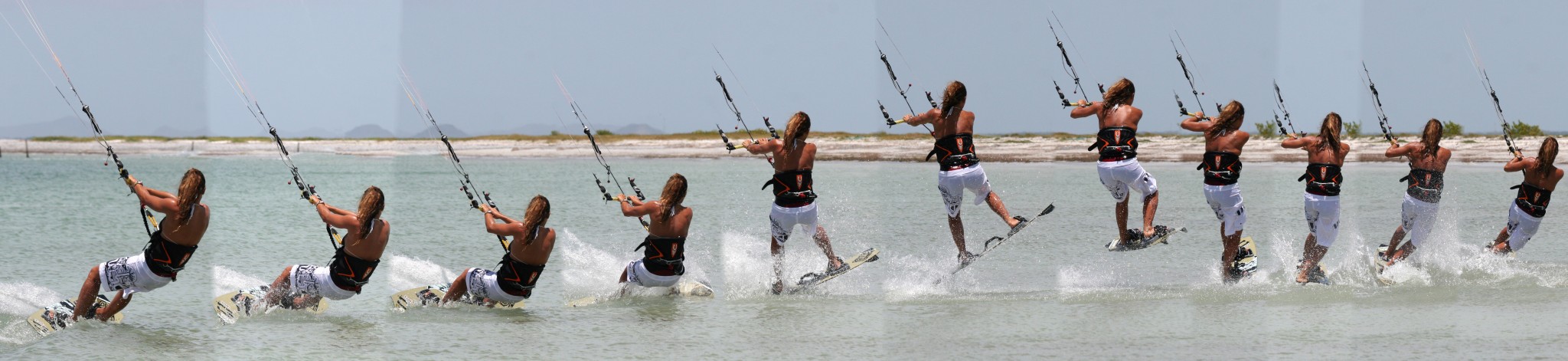

Some time ago back in the annals of history, or issue 2 to be precise, we looked at how to slide the board from heelside to toeside. Probably one of the first tasty moves any of us learnt. Now it’s time to take the Lucky Luke step even further and actually pop to toeside, which could also be your first foray into the world of popping. As long as you can happily slide to your toeside edge and then ride merrily along then this really shouldn’t take long to master.
If you haven’t yet learnt to pop don’t worry, as this is as good a time as any. Popping is really just a method of getting your board off the water without using the kite to actually jump. Think of it as ollie-ing a skateboard or snowboard, or just jumping up and down in a fit of rage on a bag of tomatoes!

Pretty much everything you’ll need to do you’ll have done before. So we don’t intend to repeat everything we did on how to get to toeside, so if you’re in any doubt have a butcher's back at issue 2.
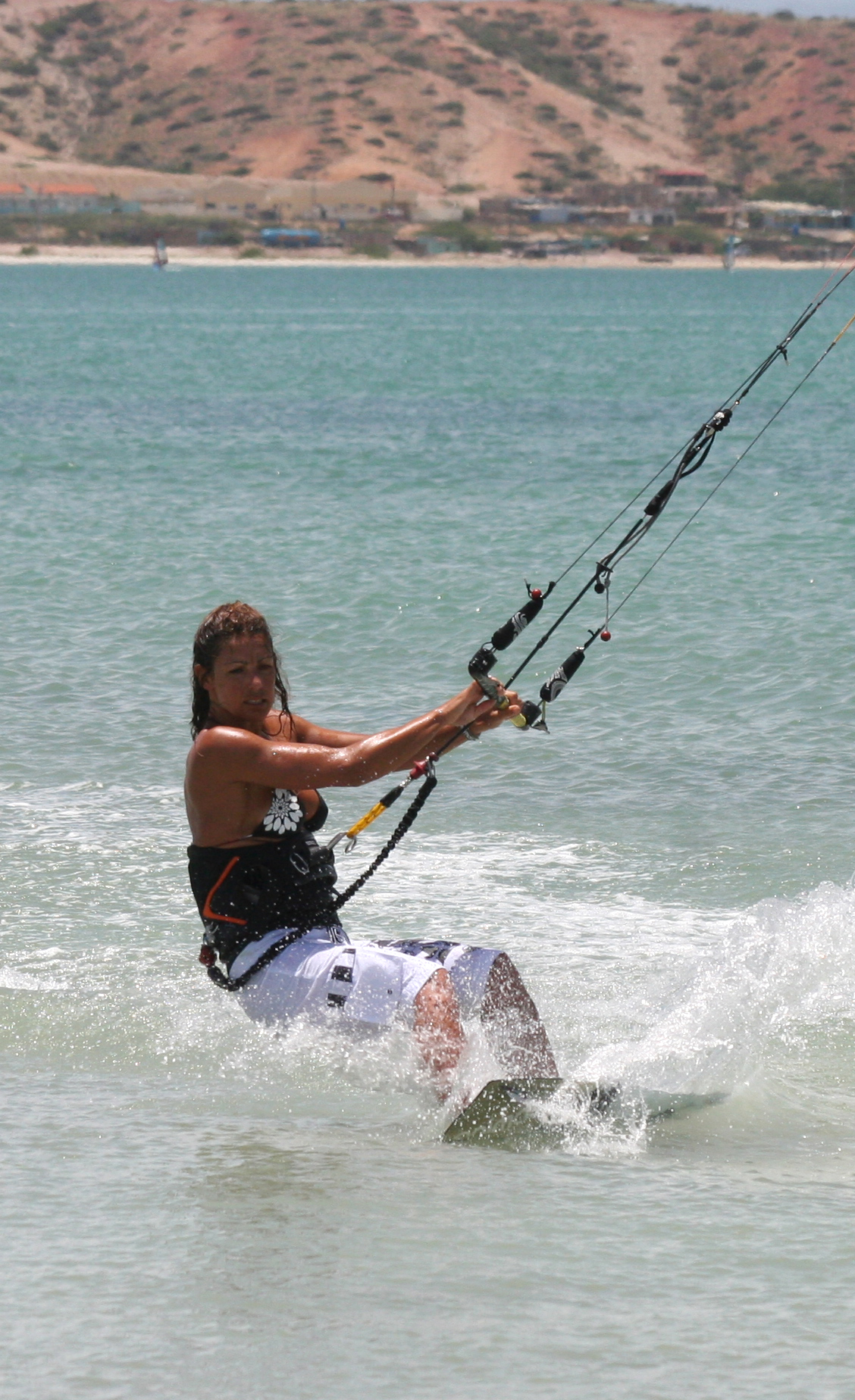
If you have a look at Pic A you can see Karine is carving into the wind as she would normally do to switch to toeside. The only difference is perhaps the amount of spray, due to her carrying a bit of speed. From here if she was to switch to toeside she would shift all her weight over her front leg and push her back leg around so that it pointed the tail of her board off down wind.
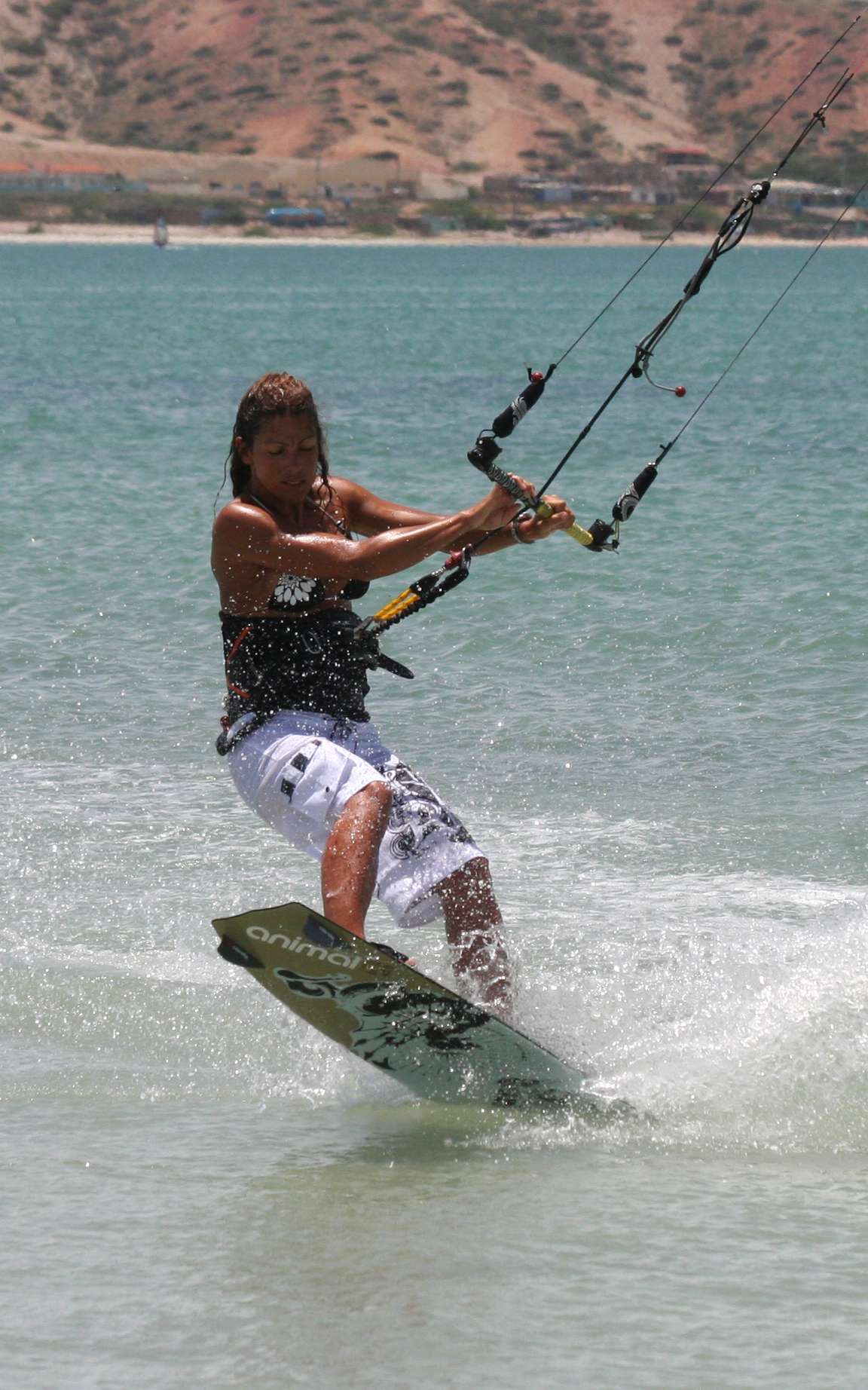
However in Pic B rather than lean forward and slide the back of the board Karine has kept her body weight over her back foot and very suddenly stamped down very hard on her back foot by explosively extending her back leg. With her weight towards the back of the board the nose rises suddenly as she pushes the board down underneath her.
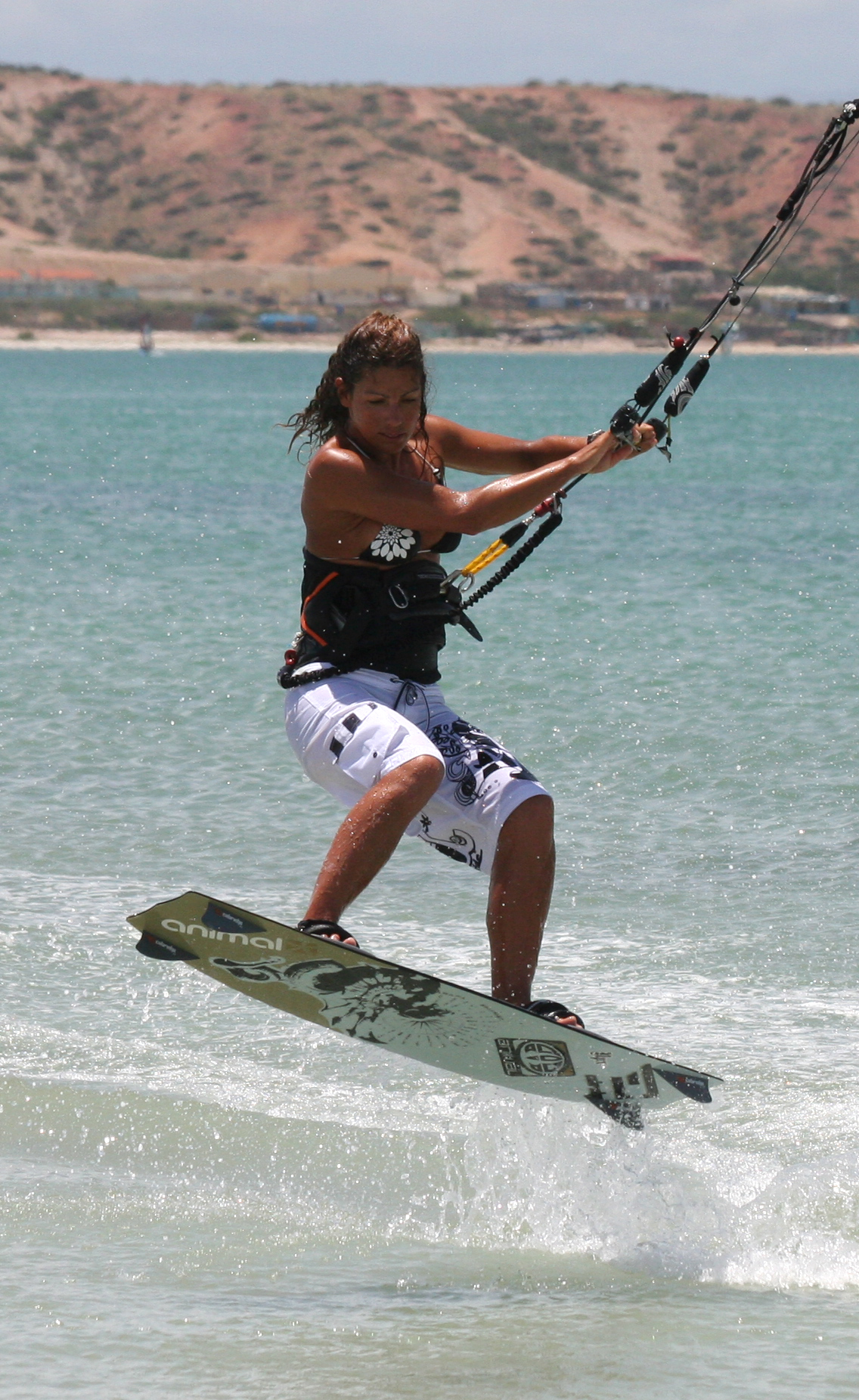
In Pic C we can see the result of pushing the board down into the water. It actually corks back up out of the water, and because Karine has turned her head and opened her shoulders and is leaning over the board as she would to go toeside, she and the board are turning just as they would on the water. If you’re prone to taking your hand off to go to toeside, practice doing it with both hands on the bar.
As is so often the case, if you can bully yourself into going for it, the chances are you’ll succeed. If you can switch to toeside without thinking, then now is not the time to start. All, you need to do is concentrate on not sliding the board, but actually using it as a platform to spring up and away from. If you do this, the rest will happen automatically as muscle memory takes over and lets Lucky Luke (see Issue 2) finish the job.
Before we have a look at how it works out on the water there are a few other areas we need to have a look at.
1. The kite. Because you intend to pop up off the water you want to have your kite at 11 or 1 o’clock. If its any higher you will end up sliding as there will be no resistance to push against. Also with the kite high it will be tempting to sit down under it, and this will yet again encourage the board to slide rather than pop.
2. You also need to concentrate on keeping your bar in and on the sweet spot. If you push your bar away you’ll dump all power and stick to the water, so trust yourself and stay in gear.
3. As already mentioned keep both hands on the bar. This way you’ll be able to keep the power in the kite as you pop up and also as you land toeside you’ll be able to work the kite to keep the lines taut and your speed up.
The most usual problem, particularly if you’ve never popped before is loosing all your speed and stopping before you get the chance to pop. If this is happening to you it’s likely that you are carving upwind for too long. Timing is key, so once you’ve stopped a few times you should be able to anticipate when it will happen and pop before. It’s also possible that you need to go a tad faster so that you don’t stop too soon.
If the board is still sliding underneath you, try and keep you front leg more extended so that your weight is biased towards the back of the board. This way when you push it will bite into the water rather than slide.
Another reason for loosing all power in the kite is if you are sitting down onto the water with both legs really bent. As this flattens the board, you loose tension in the lines and end up with your kite above you.
Letting you kite drift up by pulling on the back hand will make it very hard to pop and keep your speed. So keep the bar in and think of keeping the kite in a position from where it can pull you in the direction you want to go.
You may find that you fall over the front of the board when you land. If this is the case make sure you move your hips over the back foot whilst you are air born.
If you get round and land toeside but find there is no power or speed, make a conscious effort to pull on your front hand to get power back in the kite, AND make sure that you carve back onto your toeside edge to put tension back in the lines.
This technique article was in Issue 14 of IKSURFMAG.
By Christian and Karine
Christian and Karine have been working together as a coaching team, running improver to advanced kitesurfing clinics since 2003.